
- August 17, 2026|
- News
A roof lantern without proper ventilation is a design compromise waiting to be discovered, usually on the first genuinely warm day of the year. Homeowners notice it in an orangery that turns into a greenhouse by mid-morning and in a kitchen extension when it becomes like a steam room. And Installers notice it in the callback that follows, when a client asks why the glazed extension they specified is unusable for half the summer.
Roof lantern ventilation has moved from a nice-to-have to a genuine specification priority. The reason is straightforward: modern homes are built air-tighter than they used to be, and a glazed structure without an outlet for warm air has nowhere to send the heat and moisture it collects.
Here, we look at why that matters, what to check when comparing ventilation systems, and where SheerVent from Sheerline fits into the conversation.
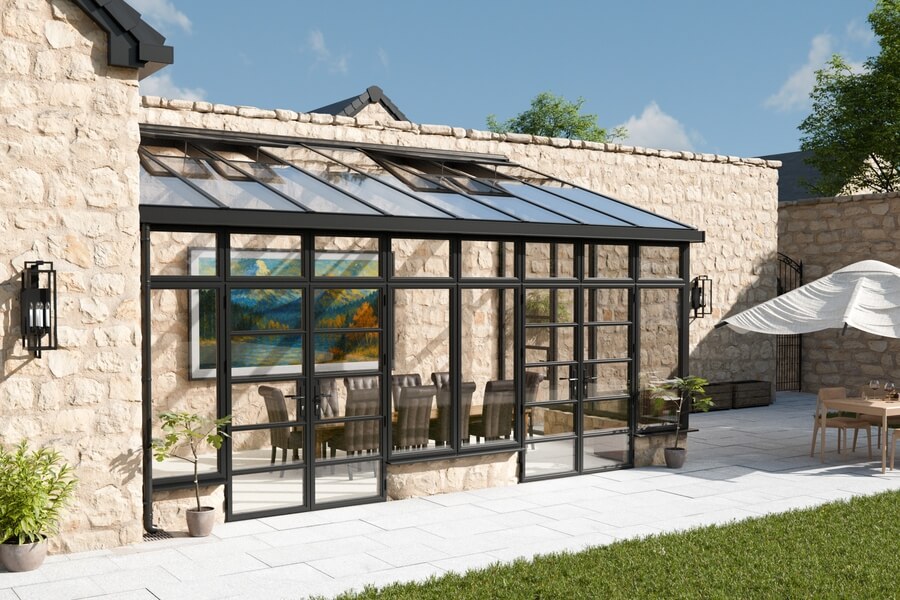
The problem with inadequate ventilation in glazed extensions
More and more glazed extensions have large expanses of glass. And if the glass in the side frames isn’t solar controlled, the glass is excellent at two things, letting natural light flood a living space, and trapping heat once it arrives. So, a south-facing lantern with no opening vents will push a room’s temperature up quickly, and closing a door or cracking a window at floor level does very little to shift that heat because warm air rises and needs an exit point at the top of the structure, not the side.
Inadequate ventilation also affects light transmission over time. Condensation and misting on the glazing bars and internal surfaces gradually dull the clarity of the glass panels, which undermines the entire point of specifying a lantern in the first place.
Why modern airtight homes need proper ventilation
Improved insulation and draught-proofing reduce heat loss and cut energy bills, which is good news for running costs. It also means natural air exchange through gaps and cracks is far lower than it was in older housing stock, so rooms that generate heat or moisture rely much more heavily on purpose-built ventilation systems to stay comfortable.
Persistent condensation encourages mould on frames and seals, degrades and can eventually lead to visible water pooling on the glass. Short, automated opening cycles flush out humid air before it has a chance to settle, protecting indoor air quality alongside the thermal performance of the lantern itself.

What is the right roof lantern ventilation option for an extension?
The right roof lantern ventilation option is the one that was designed as part of the lantern, not an add-on or an afterthought.
Teh great designers and engineers will look to engineer out any weak points in products that have found to be ‘not ideal.’
And the traditional vents we have been used to working with, that rely on muntin-bars and not only sit above the roof line, which disrupts the clean lines that make lanterns attractive in the first place. The muntin intersections are also common weak points for leaking water, meaning the ventilation option intended to solve a problem can create a new one. Glazing on these vents is frequently mismatched to the rest of the lantern, and thermal performance across the unit varies as a result.
So, there are no unnecessary muntin bars used on the S1 Roof Lantern.
Introducing SheerVent: an intelligent choice for aluminium roof lanterns
SheerVent is Sheerline’s flush-fit, thermally broken glazed roof vent available through Sheerline Bespoke. It was developed to answer the question installers were asking directly: can a lantern have effective airflow without the bulk and leak risk of a bolt-on solution? For the S1 aluminium roof lantern, the answer is yes.
Key features of SheerVent
Historically, ventilation was an afterthought bolted onto lantern designs rather than integrated into them. That trade-off no longer needs to happen thanks to the S1 and SheerVent.
| Feature | Muntin-bar vents (traditional) |
SheerVent® (Sheerline Bespoke) |
|---|---|---|
| Integration | Protrudes above roofline | Sits flush with S1’s discreet rafter bars for a minimal profile |
| Leak risk | Higher – weak points at muntin intersections | Minimised – no muntin bars |
| Thermal performance | Variable | Fully thermally broken |
| Glazing | Often mismatched | Uses the same 28mm units as the rest of the S1 lantern |
| Automation | Rarely available | Hidden, powered actuators, rain sensor option |
| Aesthetics | Visible, disruptive | Low-profile, hidden actuators |

Manual operation versus remote control and rain sensor automation
Manual operation asks someone to remember to open the vent on a warm morning and close it before a sudden downpour, which is easy to forget when a household is busy. Remote control removes that burden, and adding a rain sensor takes it further still by closing the vent automatically the moment the weather changes, so the extension can be left ventilating all day without anyone monitoring the sky.
For installers advising clients on running costs and practicality, this is often the detail that settles the decision between a vent that gets used and one that gets ignored after the first wet carpet.
Choosing the right lantern system for a perfect fit and natural look
Getting roof lantern installation right depends on treating ventilation as part of the specification from day one rather than a question raised after the frames are already ordered. A well-matched system strikes a perfect balance between light transmission, energy efficiency and aesthetic appeal, and colour options that match or complement the wider aluminium finish keep the natural look of the extension intact rather than drawing the eye to a mismatched vent.
This applies equally to a kitchen extension or a set of garden rooms. The lantern style chosen at the outset shapes how comfortable the space feels for years afterwards.

Frequently asked questions about roof lantern ventilation
Does a roof lantern need a vent?
There is no blanket legal requirement, but Building Regulations Part F covers ventilation in habitable spaces, and where a glazed extension creates a new habitable room, adequate provision is expected. Even without a strict rule, an unvented lantern over a kitchen or living space will overheat and produce condensation.
Can I add a vent to an existing lantern?
SheerVent is compatible with the S1 Roof Lantern. Specifying it at the design stage is the cleanest route, though retrofitting is possible in compatible styles. Speak to the team for guidance specific to your project.
What colour options are available for SheerVent?
SheerVent is available in standard and custom colour options to match or complement the aluminium finish of the wider lantern system, keeping the modern look of your lantern consistent from every angle.
Ready to specify roof lantern ventilation that works
Ventilation should be part of the lantern conversation from the first drawing, not an afterthought once the extension is already built. Get in touch with our friendly team today to discuss SheerVent for your next project.